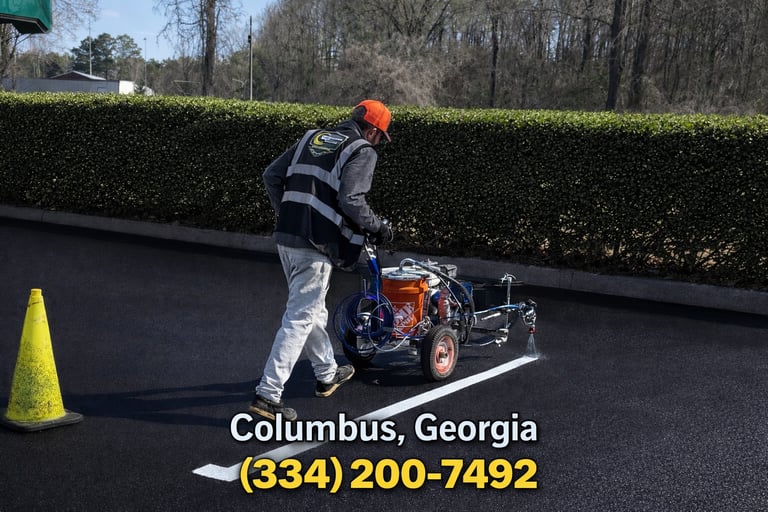
Top Asphalt Sealcoating & Line Striping Experts in Columbus, GA
➡️ REQUEST A FREE ESTIMATE TODAY!
⭐⭐⭐⭐⭐
Asphalt Paving & Repair in Columbus, Georgia
– Commercial & Residential Pavement Solutions
If you’re researching asphalt paving in Columbus, Georgia, you’re likely facing a decision that impacts both safety and long-term property value. Whether it’s a commercial parking lot, private roadway, HOA development, church property, or residential driveway, asphalt is not just a surface — it’s infrastructure.
At Chattahoochee Valley Sealcoating, we approach paving with a full lifecycle mindset. Some properties require complete removal and replacement. Others can be restored through strategic repair, patching, resurfacing, or preventative maintenance that extends structural integrity for years. Understanding the difference is critical.
Columbus, GA pavement experiences heavy rainfall, intense summer heat, UV exposure, and constant traffic stress. Without proper base preparation, drainage control, and long-term planning, even newly paved asphalt can deteriorate prematurely. With the right design and maintenance strategy, however, asphalt can perform reliably for decades.
This page serves as a comprehensive guide to asphalt paving, repair, and long-term pavement performance in Columbus. Below, you’ll learn when paving is necessary, when repair may be the smarter investment, and how to protect your asphalt to avoid unnecessary replacement costs.

What Determines Whether Asphalt Paving in Columbus, Georgia Will Last 5 Years or 20
Not all asphalt paving projects perform the same. The difference between short-term results and long-term pavement performance often comes down to preparation, structural evaluation, and attention to detail before any asphalt is installed.
In Columbus, Georgia, pavement must withstand high summer temperatures, heavy rainfall, shifting soil conditions, and continuous traffic loads. Without proper base stabilization, grading, drainage control, and compaction, even new asphalt can begin deteriorating prematurely.
Professional asphalt paving requires more than laying down hot mix. It involves evaluating subgrade stability, correcting water flow issues, addressing weak areas, and ensuring structural support beneath the surface. When these steps are executed correctly, asphalt becomes a durable investment. When they are rushed or overlooked, failure spreads quickly.
Understanding what happens beneath the surface is essential before committing to full replacement.
The Asphalt Lifecycle – Installation Is Only the Beginning
Asphalt paving is not the end of the conversation — it is the beginning of a maintenance cycle.
Every paved surface moves through predictable stages: installation, curing, surface protection, preventative maintenance, repair intervals, and eventual resurfacing or reconstruction. Property owners who understand this lifecycle often extend the usable life of their pavement significantly.
In many cases, full replacement is not immediately necessary. Strategic crack sealing, professional patching, and timely sealcoating can preserve structural integrity and delay costly reconstruction. The key is recognizing when intervention is needed before minor issues become widespread failure.
For Columbus property owners, long-term pavement performance depends on:
• Managing water drainage properly
• Sealing cracks before expansion occurs
• Protecting surfaces from UV oxidation
• Maintaining visible, compliant striping
• Repairing structural damage before it spreads
The goal is not simply new asphalt. The goal is sustained pavement performance in Georgia’s climate.
When Full Asphalt Paving Is the Right Decision in Columbus, Georgia
There are situations where full asphalt paving or complete reconstruction is not just recommended — it is necessary.
When a pavement surface has experienced deep structural failure, widespread base instability, or repeated patching in the same areas, surface-level repair may no longer provide long-term value. In these cases, full-depth paving allows the subgrade, base layer, and asphalt surface to be corrected properly from the ground up.
Common signs that full paving may be required include:
• Large interconnected potholes
• Extensive alligator cracking (fatigue cracking)
• Base failure causing sinking or depressions
• Severe drainage issues leading to water retention
• Multiple failed patch areas in high-traffic zones
In Columbus, GA, heavy rainfall and prolonged heat exposure can accelerate these failures when drainage and compaction were not properly handled during the original installation.
Full paving allows for:
• Subgrade correction
• Proper grading and slope adjustments
• Drainage improvements
• Uniform structural thickness
• Long-term durability planning
When structural integrity is compromised beyond repair, replacement becomes the responsible long-term solution.
When Asphalt Repair & Maintenance May Be the Smarter Investment
Not every deteriorating pavement requires complete replacement.
In many cases, strategic repair and preventative maintenance can restore performance and significantly extend lifespan at a fraction of the cost of full reconstruction.
If the base remains stable and deterioration is limited to surface cracking, isolated potholes, or oxidation, targeted solutions may provide excellent results.
These may include:
• Saw cut and patch repairs
• Structural asphalt patching
• Crack sealing before moisture intrusion spreads
• Sealcoating to slow oxidation
• Resurfacing overlays where base integrity remains intact
For many Columbus property owners, the smartest decision is not immediate paving — it is professional evaluation and a structured maintenance plan.
Timely intervention can:
• Prevent water infiltration
• Slow structural deterioration
• Maintain ADA-compliant striping
• Improve appearance and safety
• Extend service life by years
The goal is not to push replacement unnecessarily. The goal is to protect infrastructure responsibly.
Understanding when to pave — and when to preserve — is what separates short-term fixes from long-term pavement strategy.
How Columbus, Georgia’s Climate Impacts Asphalt Performance Over Time
Asphalt in Columbus, Georgia does not age the same way it would in cooler or drier climates. The combination of prolonged summer heat, high UV exposure, heavy rainfall, and humidity places continuous stress on pavement surfaces throughout the year.
During peak summer months, surface temperatures on asphalt can exceed 140°F. This heat softens the binder within the asphalt mix, increasing vulnerability to rutting and deformation under traffic loads. Over time, repeated expansion and contraction cycles accelerate surface fatigue.
Rainfall presents an equally serious concern. When cracks form and water penetrates the surface, it reaches the base layer. Once moisture compromises the subgrade, structural stability weakens. This often leads to:
• Potholes
• Depressions
• Alligator cracking
• Base failure
Without proper drainage planning and preventative crack sealing, these issues can escalate quickly in Georgia’s environment.
Understanding local climate conditions is critical before deciding between repair and full replacement. Pavement solutions in Columbus must be built and maintained with heat resistance, drainage control, and long-term durability in mind.
Asphalt performance is not only about installation — it is about adapting to regional conditions.
The Critical Role of Base Preparation and Compaction in Asphalt Paving
Many pavement failures begin below the surface.
While fresh asphalt may look smooth and uniform, long-term durability depends heavily on what lies underneath. Proper base preparation and compaction are among the most important factors determining pavement lifespan.
Before new asphalt is installed, the subgrade must be evaluated for stability. Weak soil, improper grading, or insufficient compaction can cause shifting, settling, and cracking soon after completion.
Professional base preparation includes:
• Removing unstable material
• Regrading for proper slope
• Addressing drainage flow
• Compacting aggregate to uniform density
• Verifying structural thickness
Compaction is especially critical. If asphalt is not compacted to proper density during installation, air voids allow moisture infiltration and oxidation, shortening lifespan significantly.
In Columbus, GA, where soil movement and heavy rainfall are common, base preparation cannot be overlooked. Investing in structural integrity from the ground up ensures that asphalt paving performs as intended.
When failures occur early, the cause is often not the surface — it is the foundation.
Drainage and Water Management – The Overlooked Factor in Pavement Longevity
Water is one of the most destructive forces affecting asphalt surfaces.
Without proper slope, grading, and runoff planning, water collects on pavement, penetrates cracks, and gradually erodes the base. Even small pooling areas can lead to premature deterioration if left unaddressed.
Common drainage-related issues in Columbus properties include:
• Low spots causing standing water
• Improper slope away from buildings
• Clogged or poorly positioned drains
• Erosion along pavement edges
When evaluating whether paving or repair is necessary, drainage must be assessed first. Replacing asphalt without correcting water flow problems often results in repeat failure.
Effective water management strategies include:
• Adjusting grading during reconstruction
• Installing proper slope ratios
• Ensuring catch basins function correctly
• Sealing cracks before moisture intrusion spreads
In Georgia’s climate, where rainfall events can be intense, proactive drainage design plays a direct role in pavement lifespan.
Durable asphalt is not just about thickness — it is about keeping water out of the structure.
Traffic Load and Usage Patterns in Columbus Asphalt Design
Not all pavement experiences the same stress. Traffic load is one of the most important factors in determining asphalt thickness, base requirements, and long-term durability.
In Columbus, Georgia, commercial parking lots often see delivery trucks, service vehicles, and repeated turning movements that create concentrated stress in specific areas. These forces can cause rutting, surface deformation, and structural cracking if pavement is not properly engineered.
Residential driveways, while lighter in load, may still experience stress from garbage trucks, moving vans, and sloped access points. The design approach must account for anticipated weight and frequency of use.
When planning asphalt paving in Columbus, traffic analysis helps determine:
• Required thickness
• Reinforced base zones
• Turning radius considerations
• High-impact repair areas
Designing for real-world traffic patterns improves longevity and reduces premature failure.
Commercial vs. Residential Asphalt Paving in Columbus, Georgia
Not all asphalt paving projects are engineered the same way. The structural demands of a commercial parking lot differ significantly from those of a residential driveway, and understanding those differences is critical before installation begins.
Commercial asphalt paving in Columbus must withstand heavier traffic loads, delivery vehicles, turning forces, and higher daily use. These conditions require:
• Increased structural thickness
• Reinforced base preparation
• Wider turning radius design
• ADA-compliant layout planning
• Strategic drainage grading
Residential asphalt paving, on the other hand, typically experiences lighter traffic but may face steeper slopes, decorative preferences, and limited space constraints. While structural load demands may be lower, proper base preparation and water management remain equally important.
For property managers and business owners, pavement failure can impact liability, safety, and customer perception. For homeowners, failure often results in expensive reconstruction that could have been avoided with preventative planning.
Whether commercial or residential, long-term performance depends on correct evaluation and structural planning — not simply surface appearance.
Common Asphalt Failure Patterns Seen in Columbus Properties
Asphalt rarely fails without warning. Most deterioration follows predictable patterns that, when identified early, can be addressed before full reconstruction becomes necessary.
In Columbus, Georgia, the most common pavement failure types include:
Alligator Cracking
Interconnected cracking that resembles reptile skin, typically caused by structural base failure or repeated heavy loads.
Longitudinal and Transverse Cracking
Cracks running parallel or perpendicular to traffic flow, often due to expansion, contraction, or joint stress.
Raveling
Surface aggregate loss caused by oxidation and binder deterioration from UV exposure.
Rutting
Depressions formed in wheel paths due to softening or insufficient base support.
Edge Cracking
Deterioration along pavement edges where support is weakest.
Recognizing these patterns early allows for targeted repair strategies such as patching, crack sealing, or localized reconstruction. Ignoring them typically leads to water intrusion and widespread failure.
Understanding how asphalt fails in Columbus conditions is key to determining whether paving, resurfacing, or maintenance is the appropriate solution.
How Long Should Asphalt Paving Last in Georgia?
One of the most common questions property owners ask is: “How long will new asphalt last?”
The answer depends on multiple factors:
• Base preparation quality
• Thickness of installation
• Traffic load
• Drainage design
• Climate exposure
• Ongoing maintenance
In Georgia’s climate, properly installed and maintained asphalt paving can last 15–25 years or more. However, without preventative maintenance such as crack sealing and sealcoating, lifespan may be significantly reduced.
Commercial lots subjected to heavy traffic often require more proactive maintenance cycles. Residential surfaces may last longer structurally but still require surface protection to prevent oxidation and cracking.
It is important to understand that paving is not a one-time solution. Performance longevity is directly tied to ongoing maintenance planning.
When asphalt is evaluated, repaired, and protected strategically, its lifespan extends dramatically — often postponing the need for full replacement.
Asphalt Resurfacing vs. Full-Depth Replacement in Columbus, GA
When evaluating deteriorating pavement, one of the most common decisions property owners face is whether resurfacing will be sufficient or if full-depth replacement is necessary.
Asphalt resurfacing, also known as an overlay, involves applying a new layer of asphalt over an existing structurally sound base. This can restore appearance, improve smoothness, and extend performance when the foundation remains stable.
Resurfacing may be appropriate when:
• Cracking is moderate but not structural
• The base layer remains intact
• Drainage conditions are functioning properly
• Surface oxidation is the primary concern
However, resurfacing will not correct deep base failure, severe alligator cracking, or widespread subgrade instability. In those situations, full-depth reconstruction may provide the only long-term solution.
In Columbus, Georgia, where heavy rainfall and soil movement are common, evaluating base integrity before choosing an overlay is critical. Installing new asphalt over a compromised base often leads to premature reflective cracking and repeat repairs.
Understanding when resurfacing is appropriate — and when replacement is unavoidable — protects both budget and structural performance.
Budget Planning for Asphalt Projects in Columbus, Georgia
Pavement investment is not just about immediate cost — it is about long-term financial planning.
Commercial property owners, HOAs, churches, retail centers, and industrial facilities must consider not only installation expenses but also lifecycle maintenance, liability exposure, and appearance standards.
Key financial considerations include:
• Structural condition of existing pavement
• Cost comparison between repair and replacement
• Long-term maintenance scheduling
• ADA compliance updates
• Risk of water-related deterioration
In many cases, proactive repair and sealcoating can extend pavement life significantly, allowing property owners to postpone full replacement while maintaining safety and appearance.
For Columbus properties managing multiple buildings or large parking areas, phased repair strategies often provide a balanced solution — addressing critical areas first while planning future work responsibly.
Smart pavement management reduces unexpected capital expenditures and protects property value.
Sealcoating After Asphalt Paving – When and Why It Matters
New asphalt requires protection.
After installation, asphalt begins a curing and oxidation process. Over time, UV exposure, moisture, and traffic wear begin to break down the binder that holds aggregate together. Without surface protection, oxidation accelerates cracking and surface deterioration.
Sealcoating plays a vital role in preserving newly paved asphalt by:
• Slowing UV oxidation
• Reducing moisture intrusion
• Enhancing surface durability
• Improving overall appearance
• Extending structural lifespan
In Georgia’s climate, preventative sealcoating is typically recommended within the first few years after installation, followed by a consistent maintenance schedule.
Sealcoating is not a cosmetic add-on — it is a protective measure that directly impacts long-term performance. For Columbus property owners investing in paving, incorporating maintenance planning early protects that investment.
Paving without preservation planning shortens lifespan unnecessarily.
ADA Compliance and Parking Lot Striping After Paving
Asphalt paving is only part of a complete parking lot solution. Proper striping and ADA-compliant layout planning are essential components of functional and legal pavement design.
Following paving or resurfacing, parking lots must be evaluated for:
• Accessible parking space dimensions
• Proper signage placement
• Required access aisle striping
• Visibility and traffic flow markings
• Fire lane and directional striping
Failure to maintain compliant striping can expose property owners to liability concerns and accessibility violations.
In Columbus, GA, commercial property managers should consider striping updates immediately following paving to ensure layout accuracy and safety.
Clear, visible striping not only improves appearance but also supports traffic organization and pedestrian safety.
A complete asphalt project does not end with paving — it includes proper marking and compliance.


Preventative Asphalt Maintenance Timeline for Columbus Properties
Pavement performance is not accidental — it is scheduled.
After asphalt paving or resurfacing, a structured maintenance timeline should be established to protect long-term performance. Without planning, even well-installed asphalt can deteriorate prematurely.
A typical preventative maintenance cycle in Columbus, Georgia may include:
• Year 1–2: Surface inspection and minor crack sealing
• Year 2–4: First sealcoating application
• Ongoing: Annual inspections for drainage and cracking
• Mid-cycle: Targeted patching in high-traffic zones
• Long-term: Resurfacing before structural failure develops
Georgia’s climate accelerates oxidation and moisture intrusion, making proactive maintenance even more critical.
Property owners who treat asphalt as an asset — not an afterthought — often extend service life by several years or more.
Preventative maintenance is significantly less expensive than reconstruction.
Crack Sealing Strategy – Stopping Structural Damage Before It Spreads
Cracks are more than cosmetic surface flaws. They are entry points for water.
Once moisture penetrates asphalt, it weakens the base layer, leading to potholes, sinking areas, and widespread structural deterioration.
In Columbus, where rainfall can be heavy and sudden, sealing cracks early prevents long-term damage.
Effective crack sealing:
• Prevents water intrusion
• Slows oxidation
• Reduces freeze-thaw stress
• Extends pavement lifespan
• Protects the base layer
Not all cracks indicate structural failure. Many can be stabilized and preserved if addressed early.
Waiting until cracking becomes interconnected often shifts the solution from maintenance to reconstruction.
Crack sealing is one of the most cost-effective pavement protection measures available.
Saw Cut and Patch Repair – Targeted Structural Restoration
When isolated sections of pavement fail, full replacement may not be necessary.
Saw cut and patch repair involves removing damaged asphalt in a defined area, correcting the base as needed, and installing new asphalt to restore structural integrity.
This method is commonly used for:
• Potholes
• Depressed areas
• Utility cut failures
• High-traffic wear zones
• Localized base instability
Proper patching requires clean saw-cut edges, adequate base preparation, and correct compaction to ensure longevity.
In many Columbus commercial properties, strategic patching extends pavement performance while allowing phased budgeting.
Targeted repair, when done correctly, preserves structural continuity without unnecessary full replacement.
Asphalt Oxidation and Surface Aging in Georgia’s Climate
Over time, asphalt naturally oxidizes.
UV exposure from Georgia’s intense sunlight gradually dries out the binder that holds aggregate together. As oxidation progresses, pavement becomes brittle and more susceptible to cracking.
Signs of oxidation include:
• Faded gray surface color
• Surface raveling
• Increased cracking
• Reduced flexibility
Oxidation does not mean immediate failure — but it does signal that protection is needed.
Sealcoating helps restore surface resilience by adding a protective barrier against UV and moisture exposure.
Understanding the difference between surface aging and structural failure prevents premature replacement decisions.
Surface deterioration can often be stabilized long before reconstruction becomes necessary.
Phased Asphalt Repair Planning for Large Commercial Properties
For large parking lots, industrial facilities, or multi-building properties in Columbus, full reconstruction at once may not be practical.
Phased repair planning allows property managers to address critical areas first while spreading capital investment over time.
A structured phased plan may include:
• Immediate repair of high-liability areas
• Drainage correction in problem zones
• Crack sealing across entire property
• Scheduled resurfacing sections
• Long-term replacement budgeting
This strategy maintains safety and appearance while preventing small failures from spreading.
Phased planning is particularly beneficial for:
• HOAs
• Apartment complexes
• Churches
• Retail centers
• Office parks
Responsible pavement management balances safety, cost, and longevity.
Long-term strategy often delivers better financial outcomes than reactive repair.
Soil Conditions in Columbus, GA and Their Impact on Pavement Stability
The performance of asphalt paving in Columbus is directly influenced by local soil conditions. Georgia soils can vary in composition, moisture retention, and stability. Clay-heavy soils, in particular, expand when saturated and contract when dry, leading to ground movement beneath pavement surfaces.
Without proper base preparation and compaction, this movement can result in cracking, sinking areas, and uneven surfaces.
Addressing soil-related concerns may include:
• Subgrade stabilization
• Removing unstable material
• Increasing aggregate base thickness
• Improving drainage flow
Professional evaluation of soil behavior helps prevent structural failure from below.
Understanding how Columbus soil reacts to moisture is essential when determining whether paving, repair, or stabilization is the correct solution.
Liability and Safety Considerations for Commercial Parking Lots
Pavement condition directly affects property liability. Uneven surfaces, potholes, faded striping, and poor drainage create safety hazards for pedestrians and vehicles.
Commercial property owners in Columbus must consider:
• Trip hazards from cracking
• Standing water creating slip risks
• Poor visibility from faded striping
• ADA compliance requirements
• Emergency vehicle access markings
Maintaining asphalt through structured repair and striping updates reduces exposure to liability claims and improves overall property safety.
Well-maintained pavement is not just aesthetic — it protects customers, tenants, and property managers.
Common Asphalt Paving Myths Property Owners Believe
Misconceptions about asphalt often lead to unnecessary expenses or premature failure.
One common myth is that all cracking means full replacement is required. In reality, many cracks can be stabilized through sealing and localized repair if addressed early.
Another myth is that thicker asphalt automatically guarantees longer lifespan. While thickness matters, base preparation and drainage control are equally critical.
Some property owners also believe sealcoating is purely cosmetic. In Georgia’s climate, sealcoating plays a protective role by reducing oxidation and moisture penetration.
Understanding these myths helps property owners make informed decisions rather than reacting to surface appearance alone.
Education leads to smarter pavement investment.
How to Evaluate an Asphalt Contractor in Columbus, Georgia
Choosing the right asphalt contractor significantly impacts long-term pavement performance.
When evaluating paving or repair providers, property owners should consider:
• Experience with Georgia climate conditions
• Understanding of base preparation
• Drainage planning knowledge
• Clear maintenance recommendations
• Transparent scope of work
Professional contractors do more than install asphalt — they assess structural integrity, traffic patterns, and long-term preservation strategy.
In Columbus, where environmental factors accelerate wear, selecting a contractor focused on lifecycle planning rather than quick installation makes a measurable difference.
Asphalt paving should be approached as infrastructure investment, not short-term surface improvement.


What to Expect During an Asphalt Paving Project in Columbus, Georgia
Understanding the paving process reduces uncertainty and helps property owners plan accordingly. Asphalt paving is not simply a one-day event — it involves preparation, coordination, curing, and follow-up evaluation.
A typical asphalt paving project in Columbus may include:
• Site inspection and evaluation
• Removal of damaged material (if required)
• Base correction and grading
• Compaction and structural preparation
• Asphalt installation and rolling
• Striping and finishing (if applicable)
Weather plays a role in scheduling, particularly in Georgia where rainfall patterns can impact installation timing. Proper communication and preparation ensure minimal disruption to business operations or residential access.
Clear expectations lead to smoother project execution and better long-term results.
Curing Time and When Asphalt Can Be Used Safely
One of the most common questions after paving is: “When can vehicles drive on it?”
Fresh asphalt requires time to cool and begin the curing process. While light vehicle traffic may be allowed within a short period depending on conditions, full curing continues over time.
In Columbus’ warm climate, asphalt may remain more flexible during peak summer temperatures. Property owners should:
• Avoid heavy turning movements immediately after installation
• Keep sharp objects off the surface
• Monitor for early indentation in high-heat conditions
Understanding curing behavior protects the surface from premature surface distortion.
Proper post-installation care plays a role in long-term performance.
Our Approach to Long-Term Pavement Strategy in Columbus
At Chattahoochee Valley Sealcoating, paving is not viewed as an isolated service — it is part of a long-term pavement strategy.
Each project is evaluated with consideration for:
• Structural integrity
• Drainage behavior
• Traffic load
• Future maintenance scheduling
• Budget planning
Rather than defaulting to full replacement in every situation, pavement is assessed holistically. In many cases, structured repair and sealcoating can extend performance significantly.
This lifecycle approach allows Columbus property owners to protect infrastructure responsibly while managing long-term investment.
Asphalt should be managed — not reacted to.
Commercial Asphalt Maintenance for Property Managers and HOAs
Large commercial and multi-unit properties require structured maintenance planning. Waiting until deterioration becomes severe often results in higher repair costs and operational disruption.
Commercial asphalt maintenance may include:
• Annual inspections
• Targeted crack sealing
• Sealcoating scheduling
• Drainage monitoring
• Striping refresh cycles
For property managers in Columbus, preventative maintenance helps preserve appearance, improve safety, and protect tenant satisfaction.
A structured plan reduces emergency repairs and helps forecast capital expenditures accurately.
Maintenance is often the most cost-effective pavement strategy available.
Why Asphalt Maintenance Often Outperforms Premature Replacement
One of the most overlooked realities in pavement management is that premature replacement can sometimes shorten lifecycle efficiency.
Replacing asphalt before structural failure may reset the surface — but without addressing root causes such as drainage, traffic stress, or maintenance neglect, deterioration can repeat.
In many Columbus properties, strategic repair combined with surface protection provides extended performance while preserving capital for future upgrades.
Understanding when to maintain and when to replace is critical.
Maintenance is not a secondary service — it is a performance strategy.
Craftsmanship Standards That Define Professional Asphalt Work
Quality asphalt paving is not defined by appearance alone. True craftsmanship is reflected in structural preparation, attention to grading, compaction consistency, and long-term performance planning.
At Chattahoochee Valley Sealcoating, projects are approached with a focus on durability rather than speed. Proper edge definition, clean transitions, consistent compaction, and drainage awareness all contribute to pavement longevity.
Professional standards include:
• Careful surface preparation
• Defined saw-cut repair edges
• Proper rolling and compaction sequencing
• Clean jobsite execution
• Accurate striping alignment
When asphalt is installed correctly from the start, it performs better under traffic, resists premature cracking, and responds more effectively to preventative maintenance.
Long-term durability begins with disciplined execution.
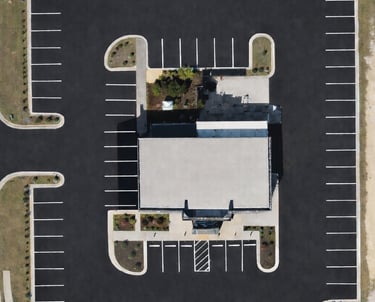
A Regional Pavement Authority Serving Columbus, Georgia
Asphalt conditions across Georgia and Alabama vary by climate, soil, and usage demands. Experience working across regional environments provides valuable insight into how pavement performs under different stress conditions.
Serving Columbus, Georgia requires understanding:
• Local rainfall patterns
• High summer heat exposure
• Soil movement tendencies
• Commercial traffic density
• Property management expectations
Chattahoochee Valley Sealcoating approaches each project with this regional perspective. Whether addressing structural repair, planning new asphalt paving, or developing a long-term maintenance strategy, decisions are made with durability and performance in mind.
Pavement is infrastructure. Treating it as such ensures safer surfaces and stronger long-term outcomes.
Planning Asphalt Paving or Repair in Columbus? Start With a Professional Evaluation
Every property is different. The condition of the base, drainage patterns, traffic usage, and maintenance history all influence whether paving, resurfacing, or repair is the correct course of action.
Rather than defaulting to replacement, a structured evaluation identifies:
• Structural integrity
• Repair viability
• Drainage effectiveness
• Maintenance opportunities
• Long-term performance planning
For commercial property owners, HOAs, churches, industrial facilities, and residential clients in Columbus, Georgia, informed decisions protect both safety and budget.
If you are considering asphalt paving, structural repair, sealcoating, or parking lot striping, begin with a professional evaluation and a long-term strategy tailored to your property’s needs.
Well-planned pavement work delivers measurable results — not just immediate improvement.
Before You Replace It, Let’s Evaluate It
Not every asphalt surface in Columbus needs to be completely replaced.
In many cases, strategic pavement repair, crack sealing, sealcoating, and structural patching can extend the life of your asphalt for years — often at a fraction of the cost of full reconstruction.
We help property owners determine when paving is necessary and when maintenance is the smarter investment. Our approach is based on condition, drainage behavior, traffic load, and long-term performance — not just appearance.
If you’re considering asphalt paving in Columbus, GA, let’s first determine the most cost-effective and structurally sound solution for your property.
© Powered by
Chattahoochee Valley Sealcoating, LLC
Terms and Conditions
This website is operated as a local informational and marketing resource for parking lot maintenance services in the Columbus, Georgia area. Services referenced on this site are provided by Chattahoochee Valley Sealcoating, LLC, a licensed and insured asphalt maintenance company serving Columbus, Georgia and surrounding areas. Service availability may vary based on location, weather conditions, and project scope. All estimates are subject to on-site evaluation. This website is not affiliated with any government entity.