Top Asphalt Sealcoating & Line Striping Experts in Columbus, GA
➡️ REQUEST A FREE ESTIMATE TODAY!
⭐⭐⭐⭐⭐

Professional Asphalt Patching in Columbus, GA
At Chattahoochee Valley Sealcoating, we provide professional asphalt patching services in Columbus, Georgia to repair damaged pavement, restore structural integrity, and prevent further surface failure. Asphalt patching is a critical repair method used when pavement damage goes beyond surface cracks and requires removal and replacement of compromised asphalt. From residential driveways to commercial parking lots, our patching solutions are designed for durability, safety, and long-term performance under real-world conditions.
What Is Asphalt Patching and When Is It Needed?
Asphalt patching is the process of removing damaged or failed asphalt and replacing it with new material to restore strength and stability. Patching is necessary when pavement damage extends deeper than surface cracks, often due to water intrusion, base failure, or heavy traffic stress. When properly executed, asphalt patching stops deterioration and prevents damage from spreading into surrounding areas.

Common Causes of Asphalt Failure in Columbus, GA
In Columbus, asphalt failure is commonly caused by water penetration, poor drainage, heat expansion, aging pavement, and constant vehicle traffic. Over time, these factors weaken the asphalt base and surface layers, leading to soft spots, cracking, and surface collapse. Asphalt patching addresses these failures directly instead of covering them temporarily.
Surface Damage vs Structural Damage
Not all asphalt damage requires patching. Surface-level issues can often be resolved with crack repair or sealcoating, while structural damage requires patching to correct base instability. We evaluate each damaged area to determine whether patching is the appropriate solution, ensuring repairs are both effective and cost-efficient.
Types of Asphalt Patching We Perform
Asphalt patching can vary based on severity and location. We perform:
Surface patching for shallow damage
Full-depth patching for base failure
Isolated patch repairs in high-traffic zones
Large-area patching for widespread deterioration
Each approach is selected based on pavement condition and long-term performance needs.
Our Asphalt Patching Process
Our patching process is built around proper preparation and durability:
Removal of failed asphalt
Cleaning and preparing the repair area
Evaluating and stabilizing the base
Installing new asphalt material
Proper compaction for strength
This method ensures the patch integrates with the surrounding pavement and resists future failure.
Asphalt Patching for Commercial Parking Lots
Commercial parking lots experience constant traffic, turning movements, and heavy loads that accelerate pavement damage. Asphalt patching restores damaged sections while maintaining safe access and improving appearance. Proper patching also prepares parking lots for sealcoating and striping to ensure a uniform, professional finish.
Residential Asphalt Patching Services
Driveways and private roads can develop soft spots, potholes, and sunken areas over time. Residential asphalt patching repairs these problem areas, improves surface safety, and helps homeowners avoid full driveway replacement by addressing damage early.
Why Proper Patching Extends Pavement Life
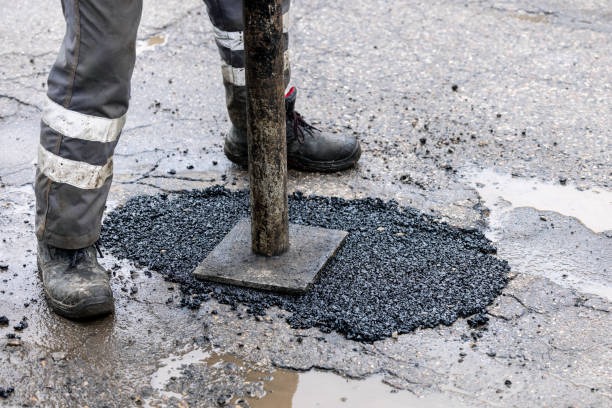
When asphalt damage is ignored, deterioration spreads quickly. Proper patching removes the failed material and restores the pavement structure, helping extend the life of the entire surface. This preventative approach reduces long-term repair costs and delays the need for major resurfacing or replacement.

Full-Depth Asphalt Patching vs Temporary Repairs
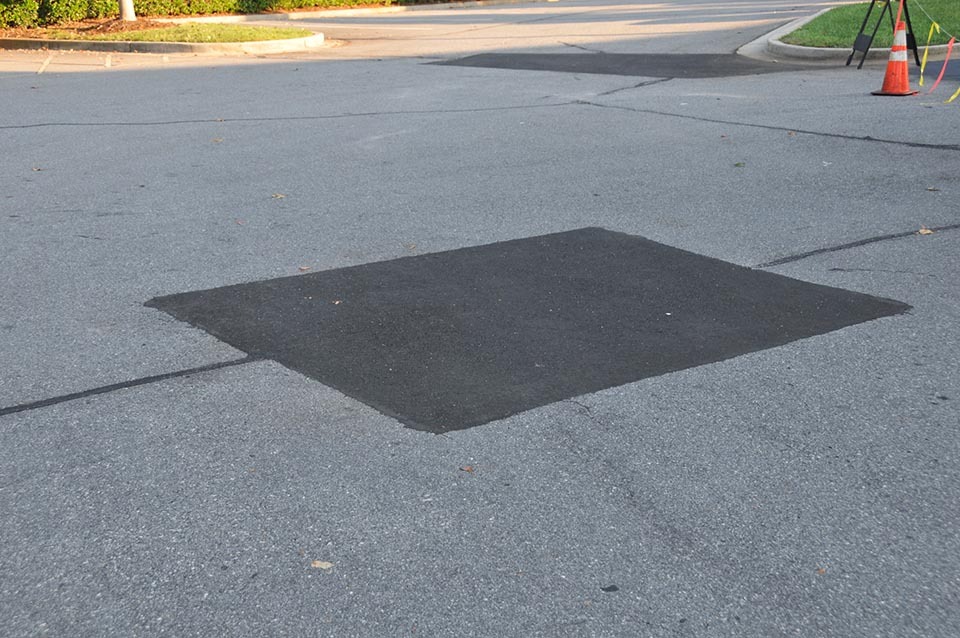
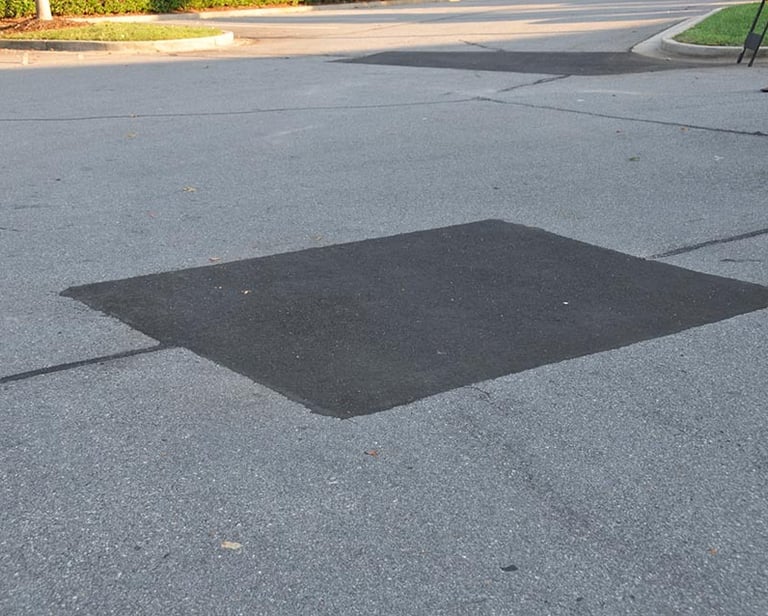
Not all asphalt patching solutions offer the same longevity. Temporary repairs may address surface symptoms, but full-depth asphalt patching corrects the underlying problem by removing failed material down to a stable base. Full-depth patching is the most reliable option when base failure, soft spots, or repeated damage are present, making it the preferred solution for long-term performance.
Why Temporary Patches Often Fail
Temporary patches are sometimes used for short-term fixes, but they often fail when water intrusion, traffic loads, or poor compaction are involved. Without removing the damaged asphalt and stabilizing the base, temporary repairs are vulnerable to reopening, cracking, and surface separation. Professional asphalt patching eliminates these issues by addressing the root cause.
How Water & Drainage Affect Asphalt Patching
Water is one of the biggest contributors to asphalt failure. Poor drainage allows moisture to weaken the base beneath the asphalt surface, leading to soft spots and collapse. During asphalt patching evaluations, we assess drainage patterns and surrounding conditions to ensure repaired areas remain stable and resistant to future damage.
Weather Considerations for Asphalt Patching in Columbus, GA
Local weather conditions play an important role in asphalt patching performance. Temperature, humidity, and rainfall affect material bonding and compaction. Our patching process accounts for Columbus weather patterns to ensure repairs cure properly and deliver long-lasting results.
Asphalt Patching for Safety & Liability Reduction
Damaged asphalt creates trip hazards, vehicle damage risks, and liability concerns for property owners. Proper asphalt patching restores smooth surfaces, improves traction, and reduces the likelihood of accidents. For commercial properties, addressing damaged pavement is essential for maintaining a safe environment for customers and employees.
Cost-Effective Asphalt Patching vs Full Replacement
Asphalt patching is often a cost-effective alternative to full pavement replacement when damage is isolated. By repairing only the failed sections, property owners can restore pavement integrity while extending the life of surrounding asphalt. Strategic patching helps delay major capital expenses and maximize pavement value.
High-Traffic Areas That Require Reinforced Patching
Entrances, drive lanes, loading zones, and turning areas experience concentrated stress and wear. These locations often require reinforced patching techniques to withstand constant vehicle movement. Properly patched high-traffic zones help prevent repeat damage and maintain pavement performance.
Preparing Asphalt Surfaces for Sealcoating & Striping
Asphalt patching is an important step before sealcoating and parking lot striping. Repairing damaged areas ensures a uniform surface, allowing sealers and striping paint to adhere correctly. This integrated approach improves appearance, durability, and overall pavement quality.
Signs Your Asphalt Needs Patching Now
Certain warning signs indicate that asphalt patching should be addressed immediately. These include sunken areas, soft spots, widespread cracking, pothole formation, and areas where water consistently pools. Ignoring these signs allows damage to spread beyond the surface, increasing repair costs and accelerating pavement failure.
How Asphalt Patching Prevents Future Potholes
Most potholes begin as untreated surface or structural damage. When weakened areas are properly patched, water is prevented from entering the base, stopping the freeze-thaw and traffic stress cycle that causes potholes to form. Asphalt patching is one of the most effective ways to reduce recurring pothole issues.
Residential vs Commercial Asphalt Patching Needs
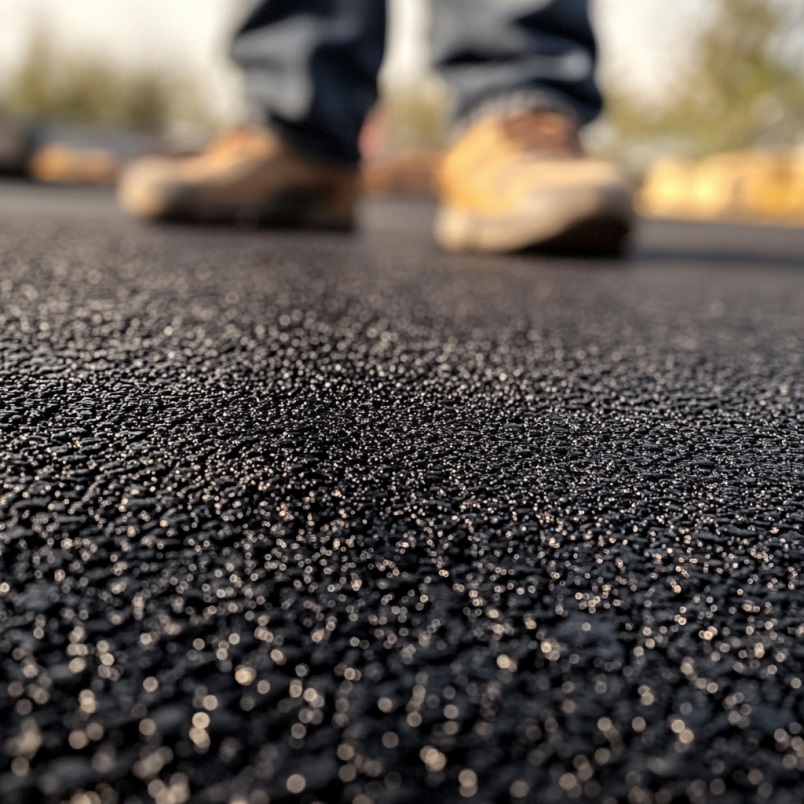
Residential asphalt patching often focuses on driveways and private access areas, while commercial patching must account for higher traffic volumes, turning movements, and heavier loads. Our patching methods are adjusted based on property type to ensure repairs are durable and suited to real-world usage.
Asphalt Patching as Part of Long-Term Pavement Planning
Patching is most effective when incorporated into a long-term pavement maintenance plan. By combining patching with crack repair, sealcoating, and routine inspections, property owners can significantly extend pavement life while reducing emergency repair costs over time.
Why Proper Base Repair Matters in Asphalt Patching
The strength of asphalt pavement depends heavily on the condition of its base. If the base is compromised, surface repairs alone will fail. Our asphalt patching process addresses base stability to ensure repairs remain strong, bonded, and resistant to future movement or collapse.
How Proactive Patching Saves Money Over Time
Proactive asphalt patching helps property owners avoid large-scale repairs or full replacement. Addressing damage early reduces labor, material costs, and downtime. Over time, consistent patching lowers overall pavement maintenance expenses and protects long-term investment value.
Integrated Asphalt Repairs for Best Results
Asphalt patching works best when coordinated with other services such as crack sealing, pothole repair, sealcoating, and parking lot striping. This integrated approach ensures pavement surfaces are structurally sound, visually uniform, and fully protected against environmental stress.
Trusted Asphalt Patching Services in Columbus, Georgia
Chattahoochee Valley Sealcoating proudly provides professional asphalt patching services throughout Columbus, GA. Our commitment to proper evaluation, quality materials, and proven repair techniques allows us to deliver long-lasting results for residential driveways, commercial parking lots, and high-traffic properties.
When asphalt damage goes beyond surface-level issues, professional patching is the key to restoring pavement integrity and preventing future failure.

© Powered by
Chattahoochee Valley Sealcoating, LLC
Terms and Conditions
This website is operated as a local informational and marketing resource for parking lot maintenance services in the Columbus, Georgia area. Services referenced on this site are provided by Chattahoochee Valley Sealcoating, LLC, a licensed and insured asphalt maintenance company serving Columbus, Georgia and surrounding areas. Service availability may vary based on location, weather conditions, and project scope. All estimates are subject to on-site evaluation. This website is not affiliated with any government entity.